Additional information
| Ethnic Groups | |
|---|---|
| Regions | |
| Primary Materials |
Authentic Art and Ethnographic Objects From Africa / Custom Mounting Services
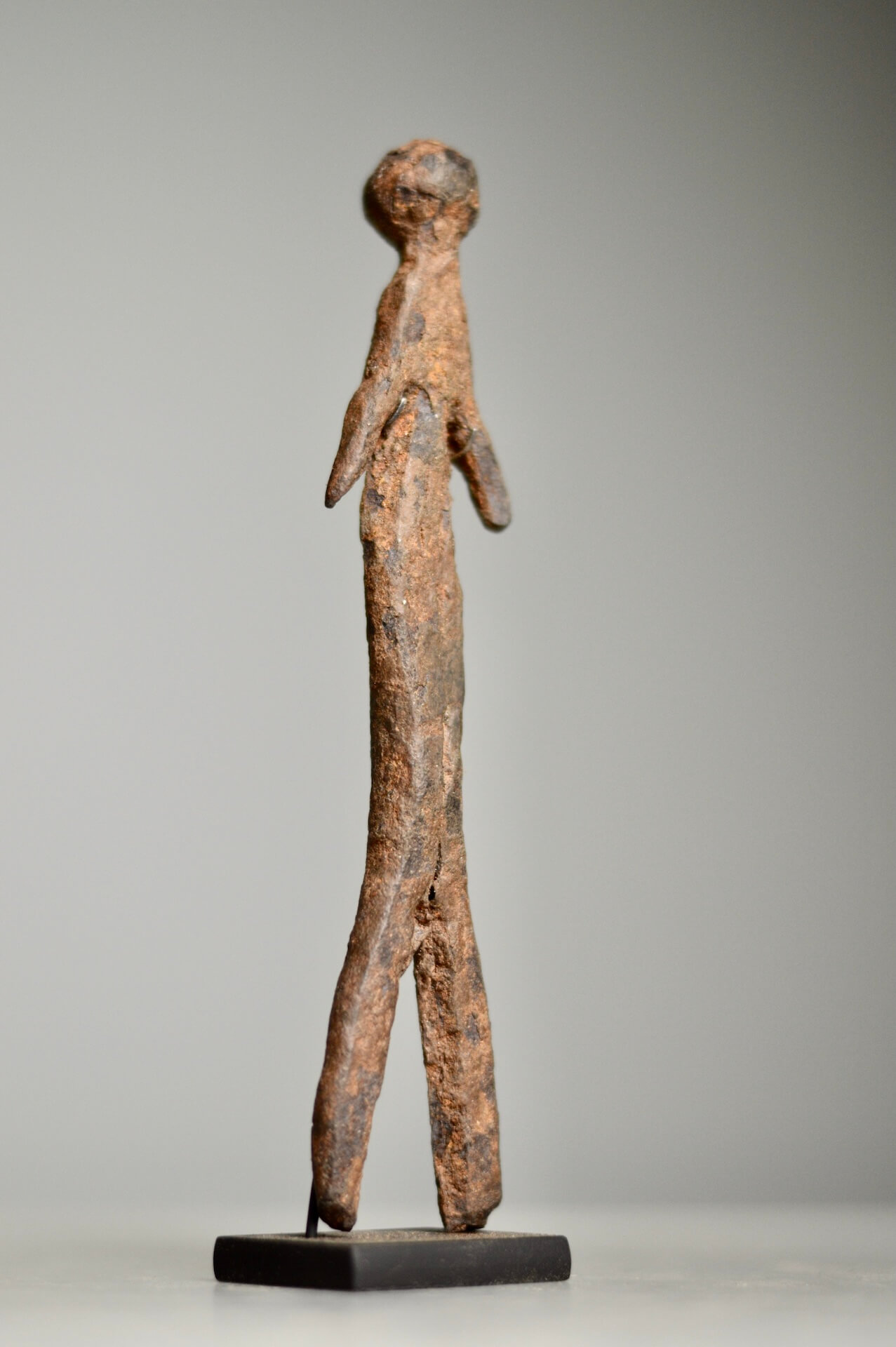


The earliest record of small iron figures from the Moba people of north Togo, Ghana and the adjoining region in Burkina Faso was by Albert de Surgy in 1983. According to his book La divination par les huit cordelettes chez les Mwaba-Gurma (Nord Togo): Esquisse de leurs croyances religieuses (L’Harmattan, Paris), personal protective spirits, called cicili, were represented by small statuettes made of word or iron. Diviners apparently employed both wood and iron figurines in a ritual practice that involved lengths of cord. According to Christine Kreamer, cicili of either iron or metal were at times ritually wrapped in cord by a diviner. In short, iron cicili were not shrine objects; rather, they were mediums of ritual. They were made only when commanded by a spirit through the auspices of a diviner, and then executed by a blacksmith. Various techniques were used in shaping a human form from iron bar. As a result, iron cicili can be found in a variety of divergent forms: some relatively flat, and others more cylindrical. Similar figures, although usually of the flatter variety, were made and used by the Tammari (also known as the Tamberma, Ottamari and Batammariba) people of Togo and Benin. Typically, cicili figures represent an ancestor. This fine, relatively sinuous example comes from a private New York collection formed in the 1990s. $500
6.5″