Additional information
| Ethnic Groups | |
|---|---|
| Regions | |
| Primary Materials | |
| Materials |
Authentic Art and Ethnographic Objects From Africa / Custom Mounting Services
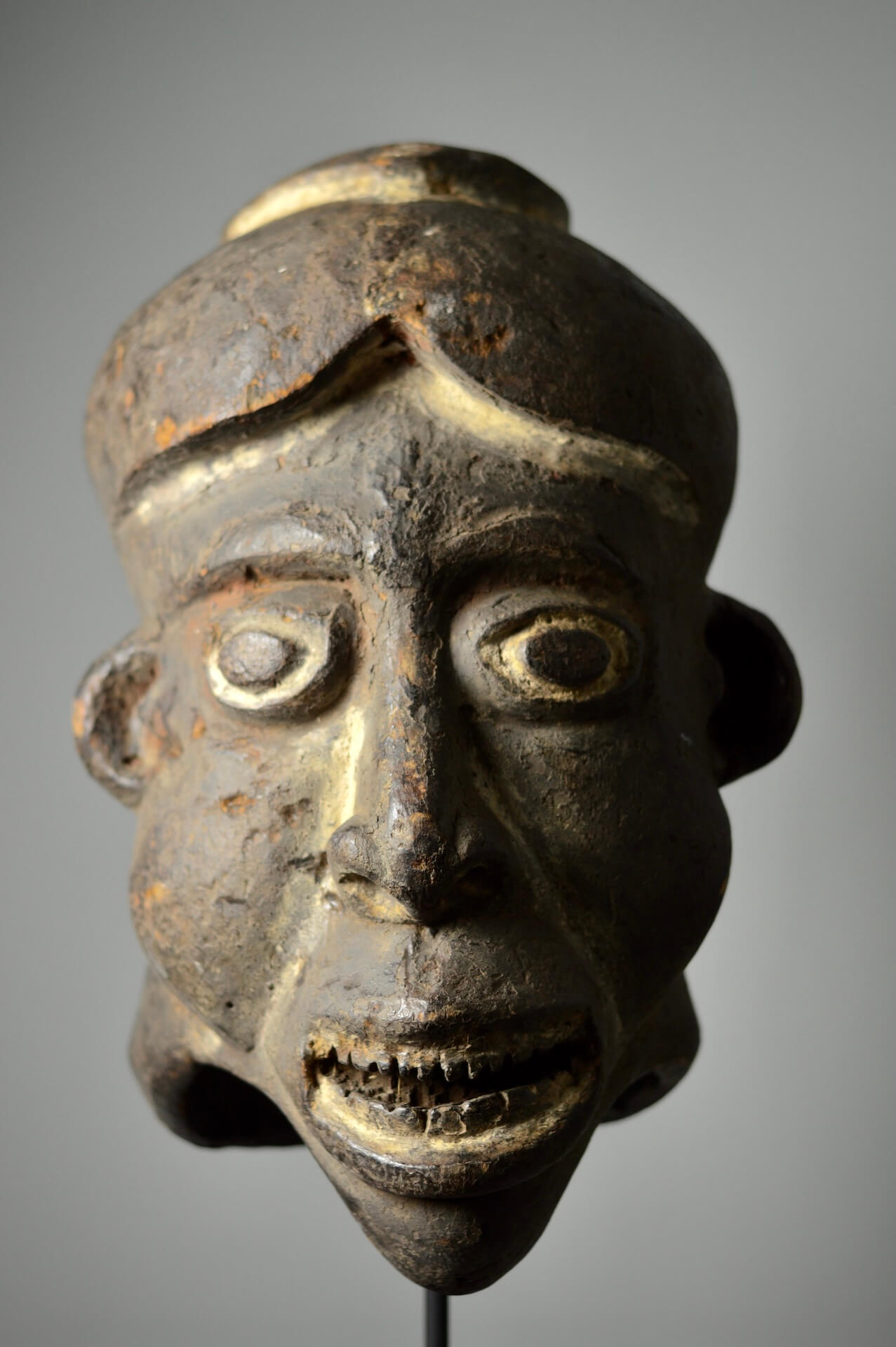
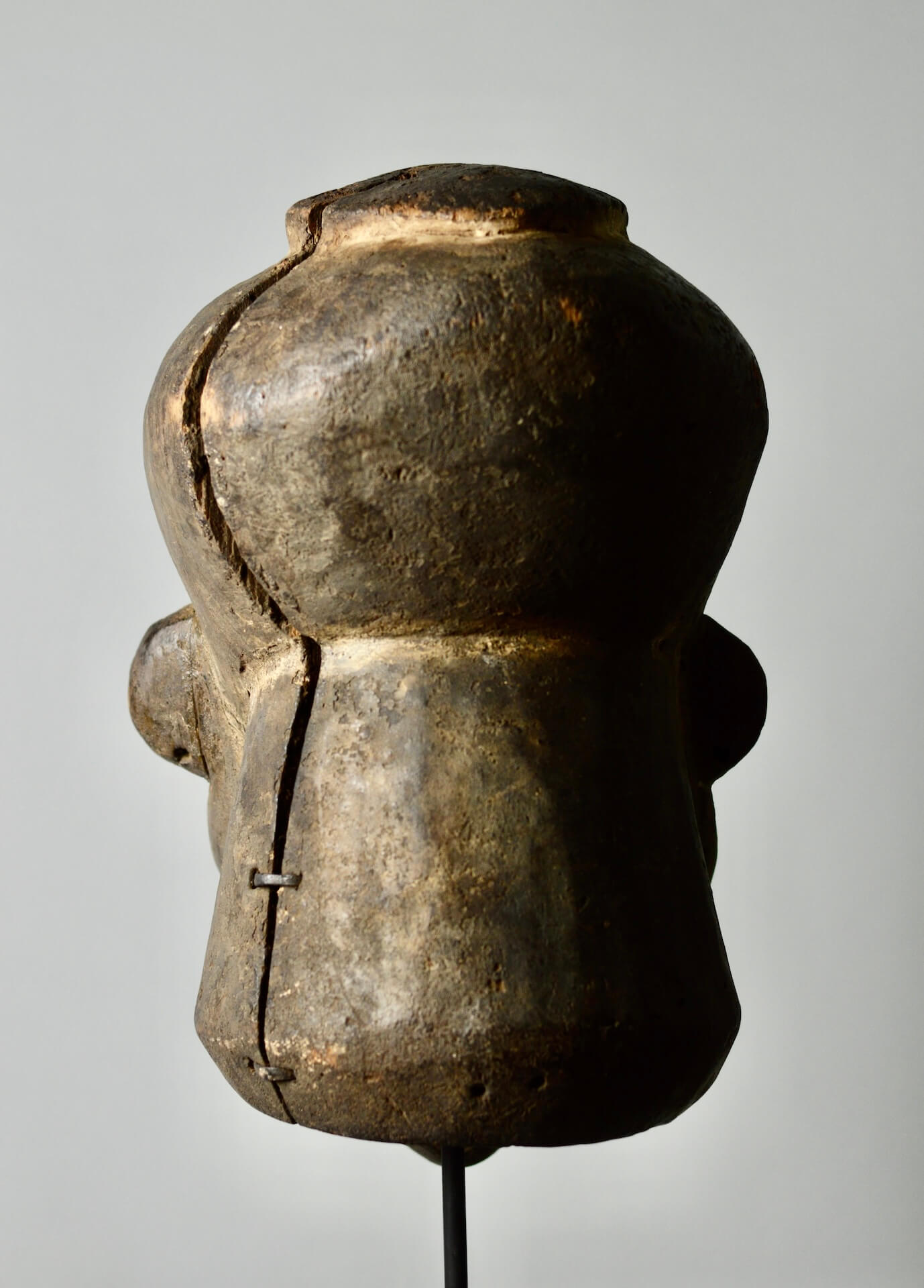
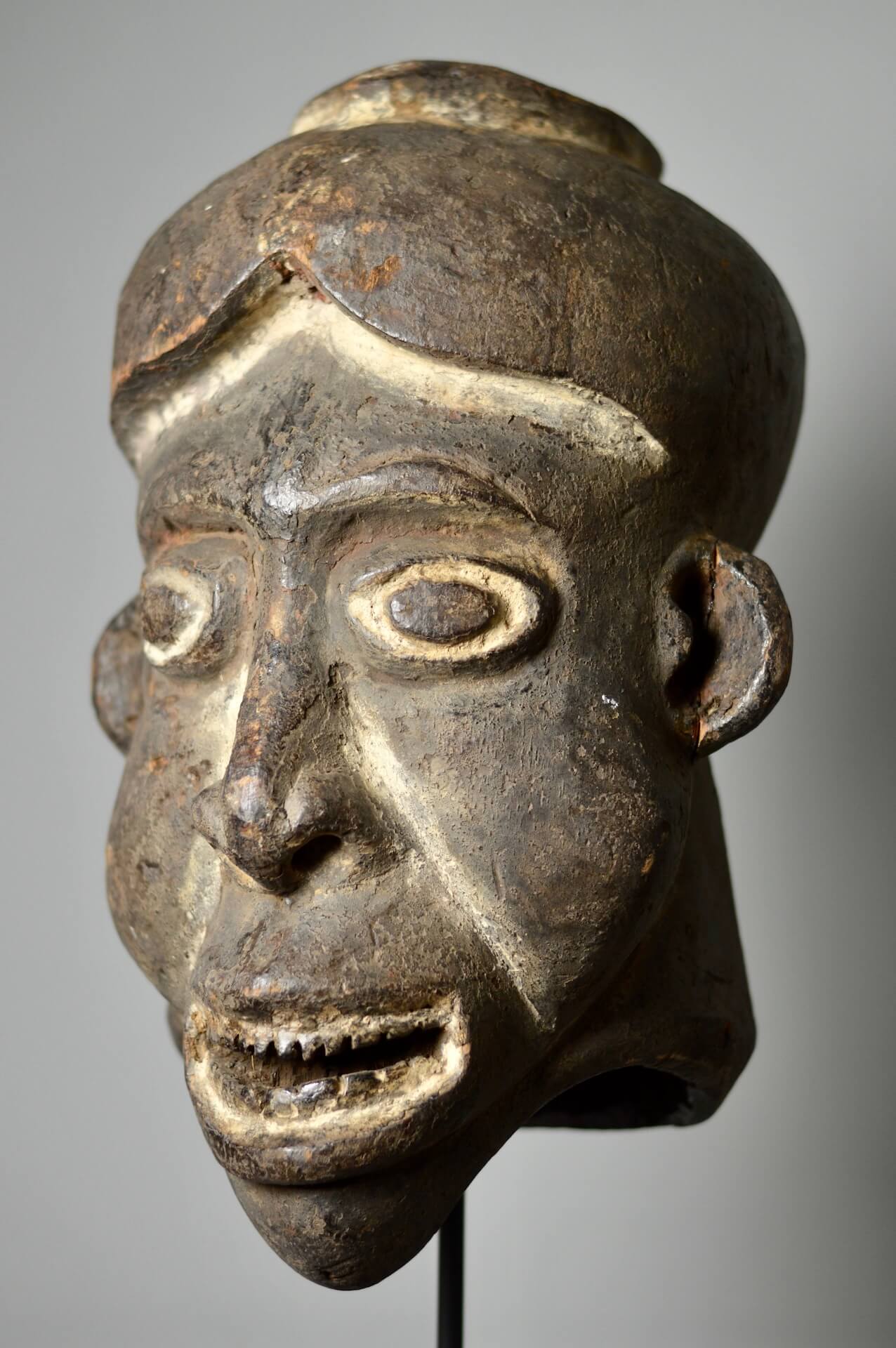
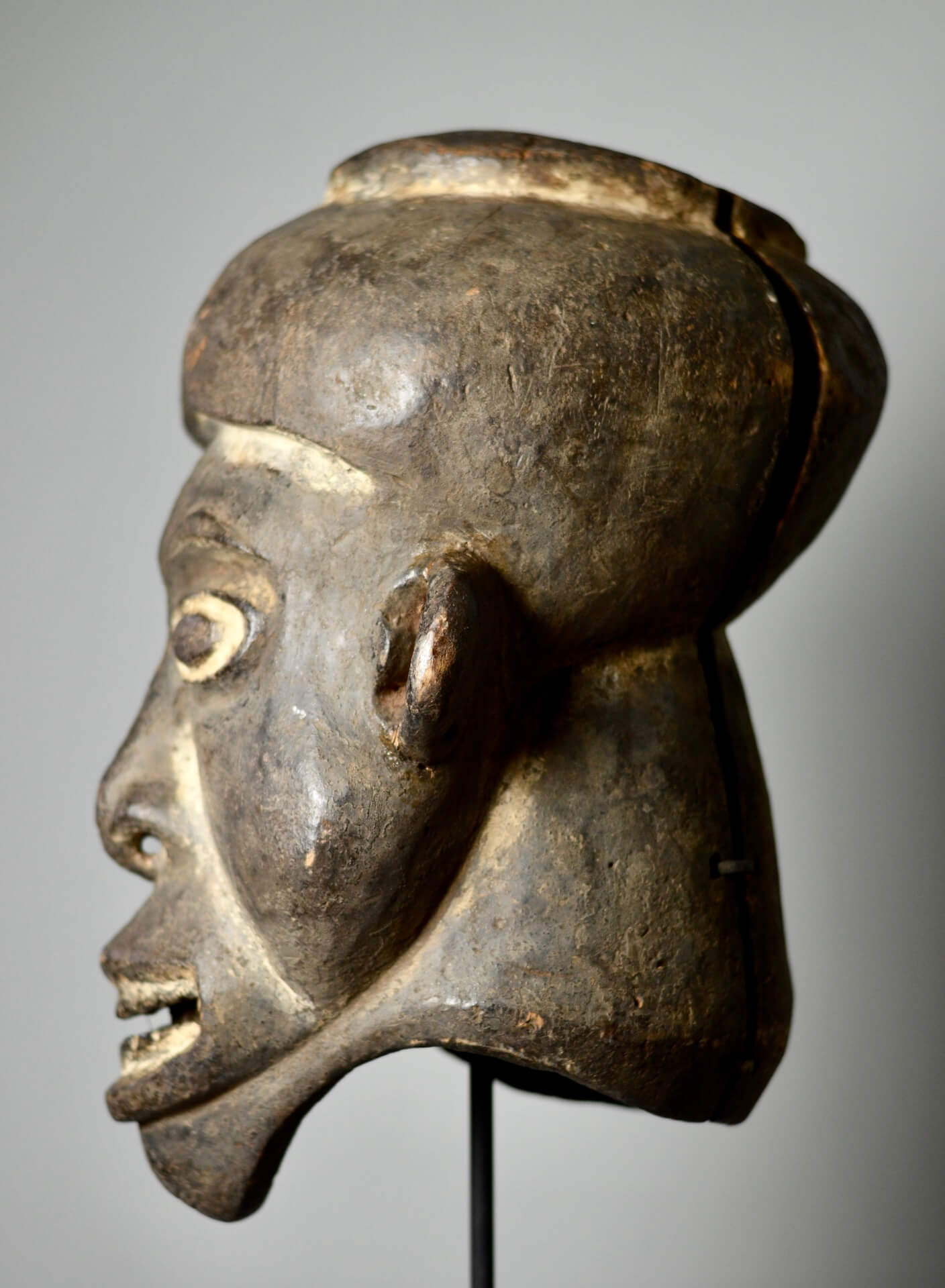
Paul Gebauer, the seminal collector and writer on the art of Cameroon, wrote that Grassfields masks, when “displayed in a museum…convey only a fraction of their dramatic qualities… Deprived of their swirling feather-cloaks, the pulsating drumbeats, and the tidal waves of song, these masks are limited witness… But there are some advantages in a museum display. One becomes aware of the extraordinary variety of styles.”
The Grassfields region is fertile volcanic upland, predominantly in west and northwest Cameroon. Its relatively cool climate, reliable rainfall, and fertile soil are ideal for a host of crops and livestock rearing. A number of kingdoms have flourished there for centuries, each developing rich ethnographic traditions strengthened and enlivened through cultural dialogue and exchange. Differentiating masks carved by these groups is challenging, in part because carvers are given significant latitude to refine their own signature styles. A Bamileke mask is often identifiable as such largely because the atelier was prolific and its signature look particular enough to that family of carvers. That is, other Bamileke ateliers can produce their own signature works that are as different from a fellow Bamileke shop as masks from a Kom workshop are, yet still attributable as Bamileke. It is the carving lineages that are more often responsible for a style, not the greater ethnic identity of that atelier.
This is a very old, expressive, and powerful mask from the estate collection Sidney and Gae Berman. Acquired from a Cameroonian runner in the 1970s. $775
14″ without base
| Ethnic Groups | |
|---|---|
| Regions | |
| Primary Materials | |
| Materials |