Additional information
| Ethnic Groups | |
|---|---|
| Regions | |
| Primary Materials | |
| Materials |
Authentic Art and Ethnographic Objects From Africa / Custom Mounting Services
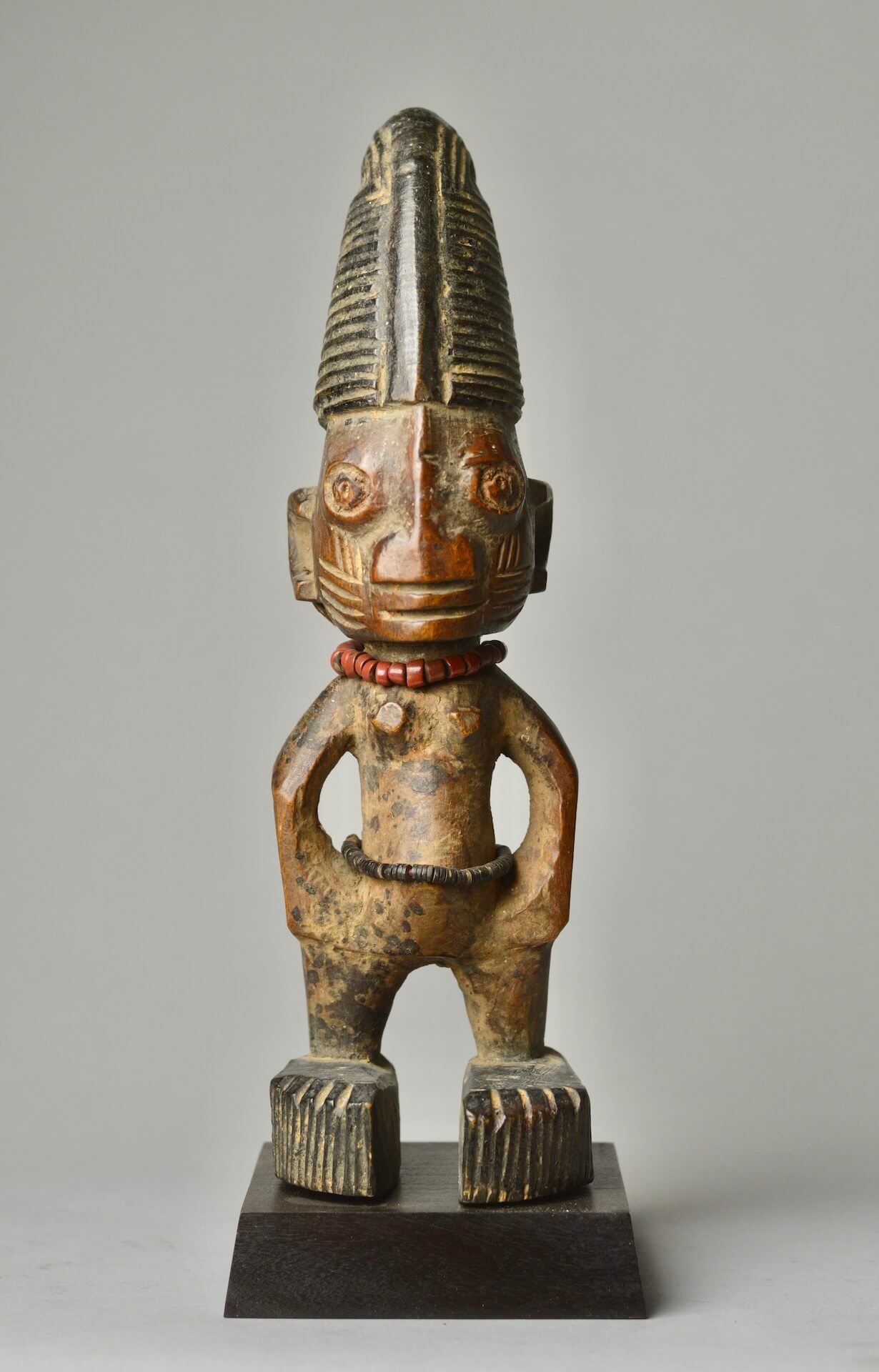
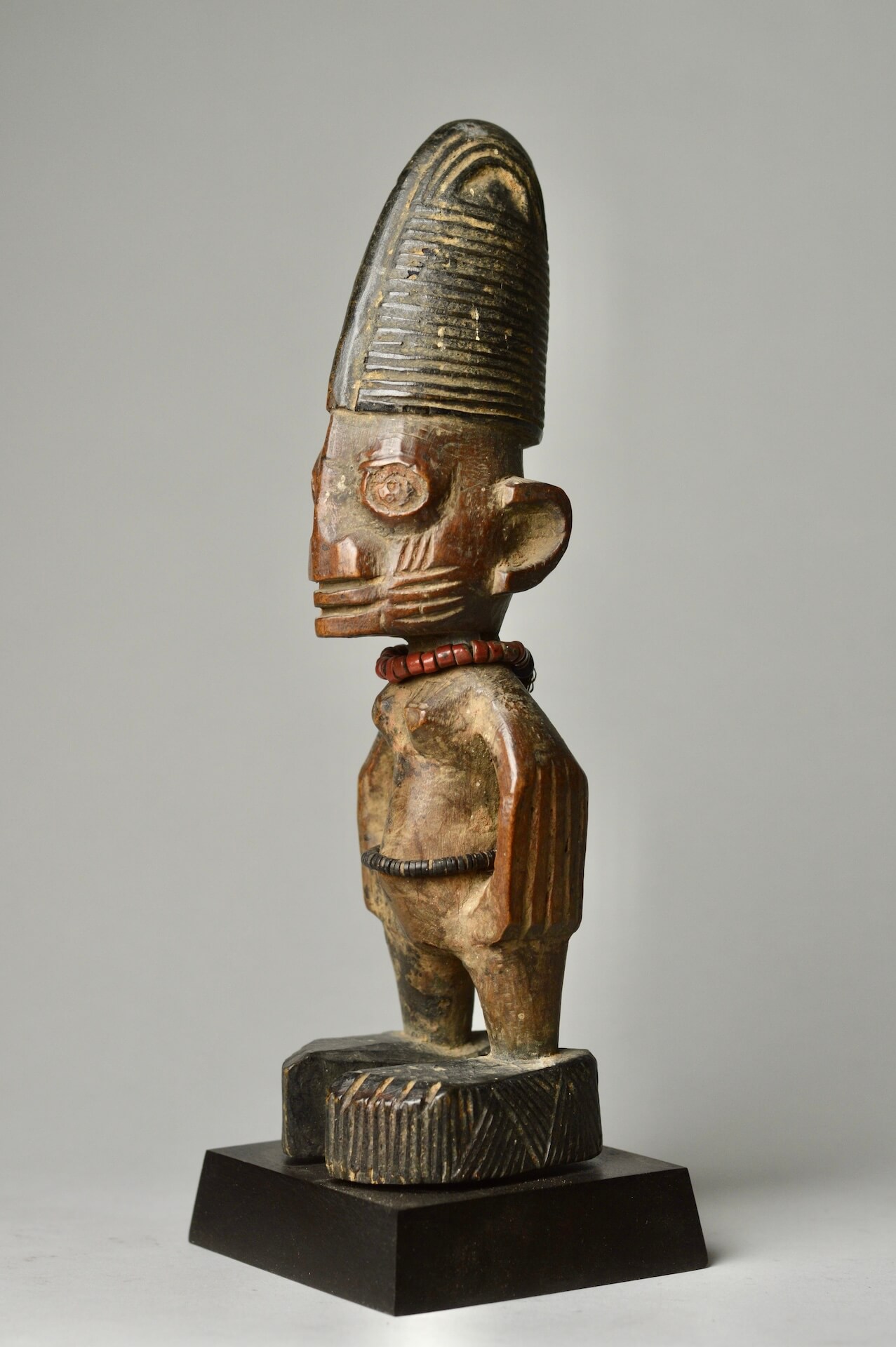
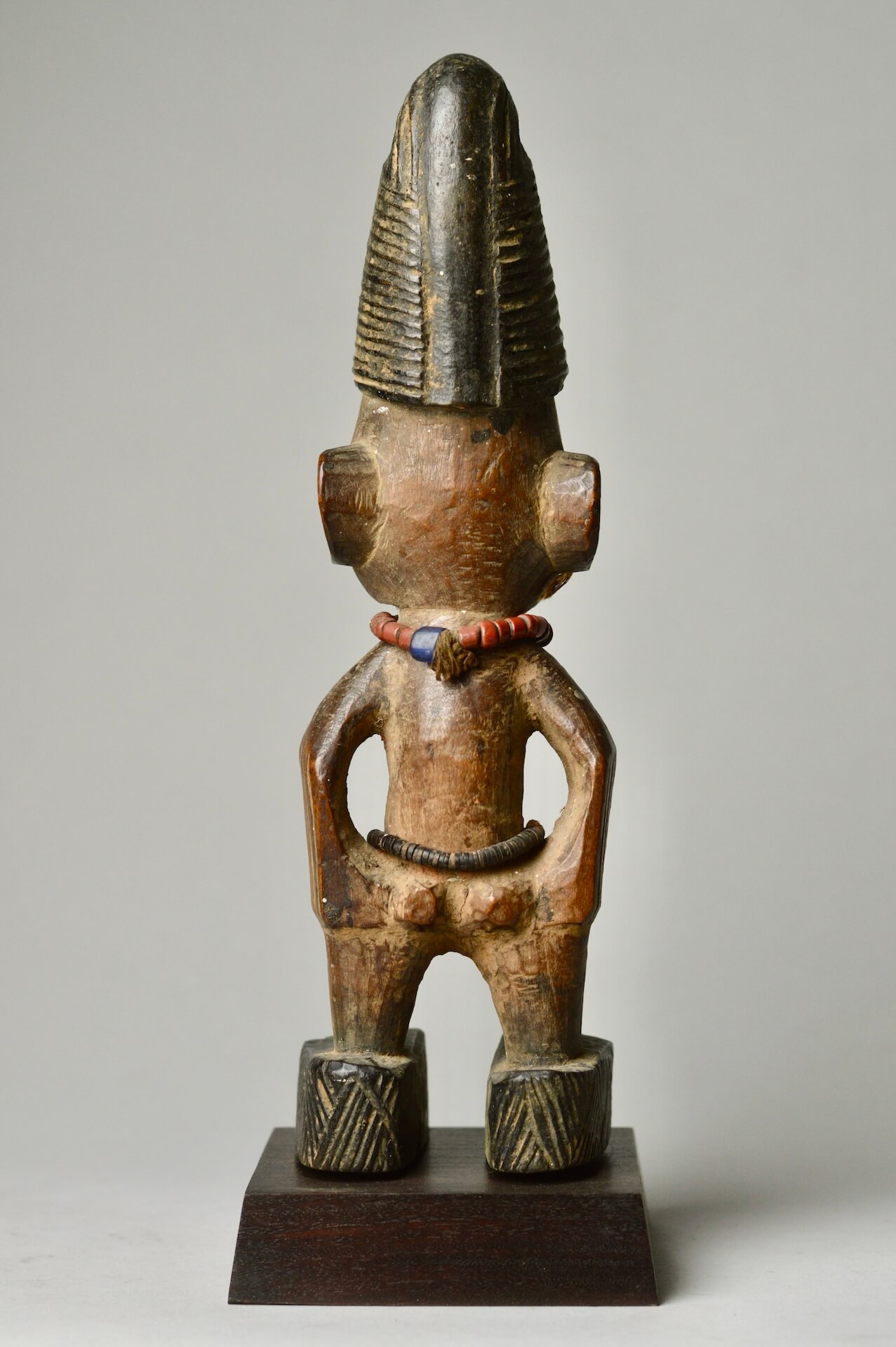
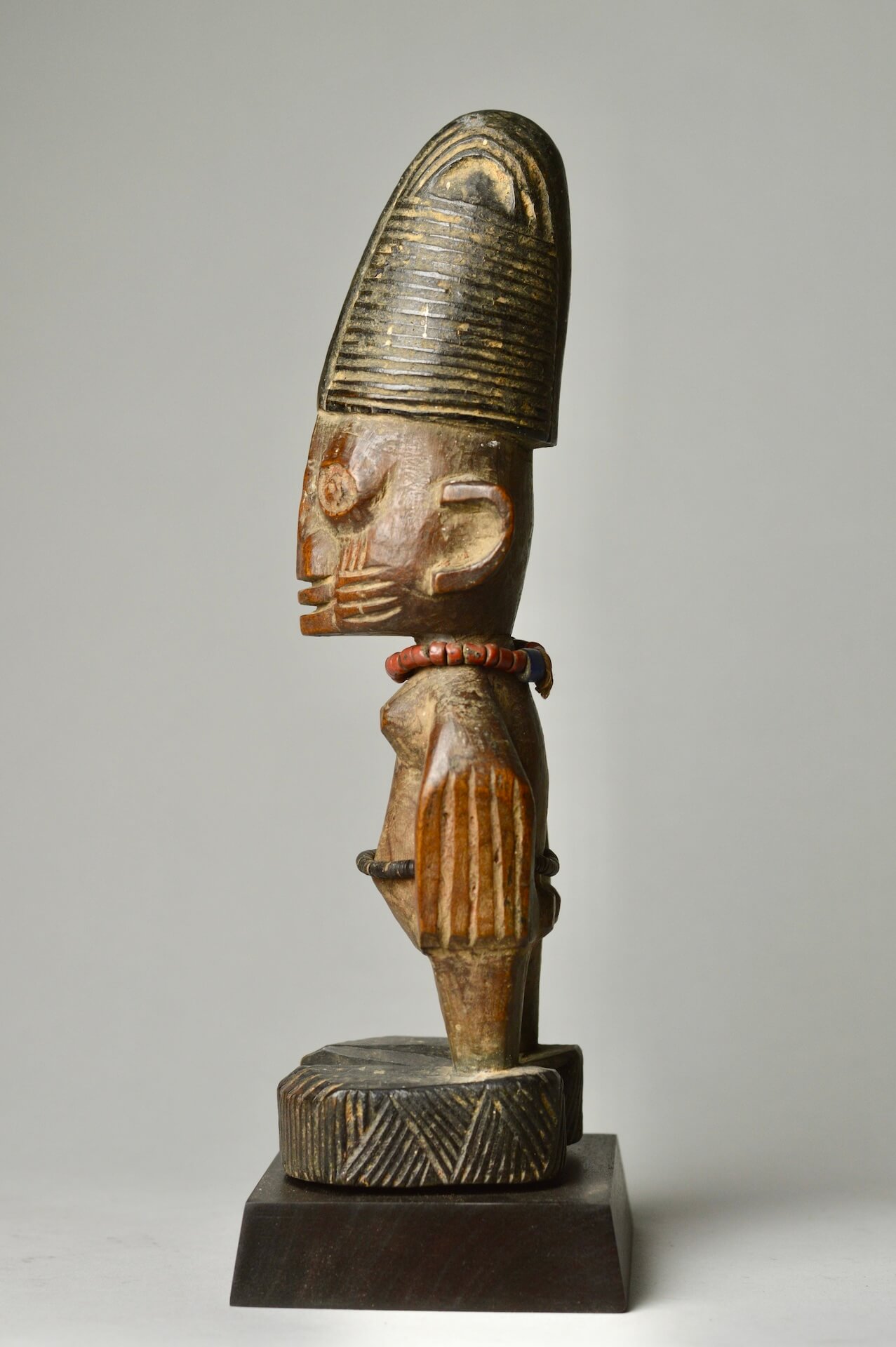
Yoruba traditional beliefs and practices have been evolving from the outset. Long ago, the Yoruba recognized that they were beset by a high rate of twin pregnancies and that the resultant births were often troubled. Even in the age of modern medicine, multiple births are risky for the mother and the babies. Low birth weights and premature deliveries are common. The Yoruba responded to the resultant high rate of infant mortality with a belief system that required couples who lost one or both twins to create a carving symbolizing the lost child, serving as its embodiment after the fact. These figures, solitary and in pairs, are known as ibejis. They are ritually fed, adorned, and looked after by their mothers to appease the spirit of the dead child so that it does not become jealous of its surviving siblings and bedevil the family with trickery and misfortune.
This single ibeji is relatively rare for having independent feet, rather than the more typical circular, integral base. Relatively petite and idiosyncratic in style, the figure may have been carved by the father or another family member of the deceased twin. For collectors looking for a unique example of the genre with abundant personality, this ibeji fits the bill. Unmounted. $500
10.5″